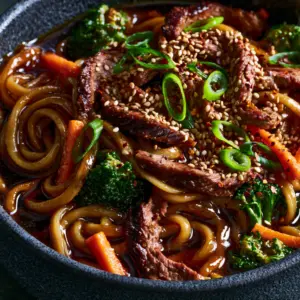
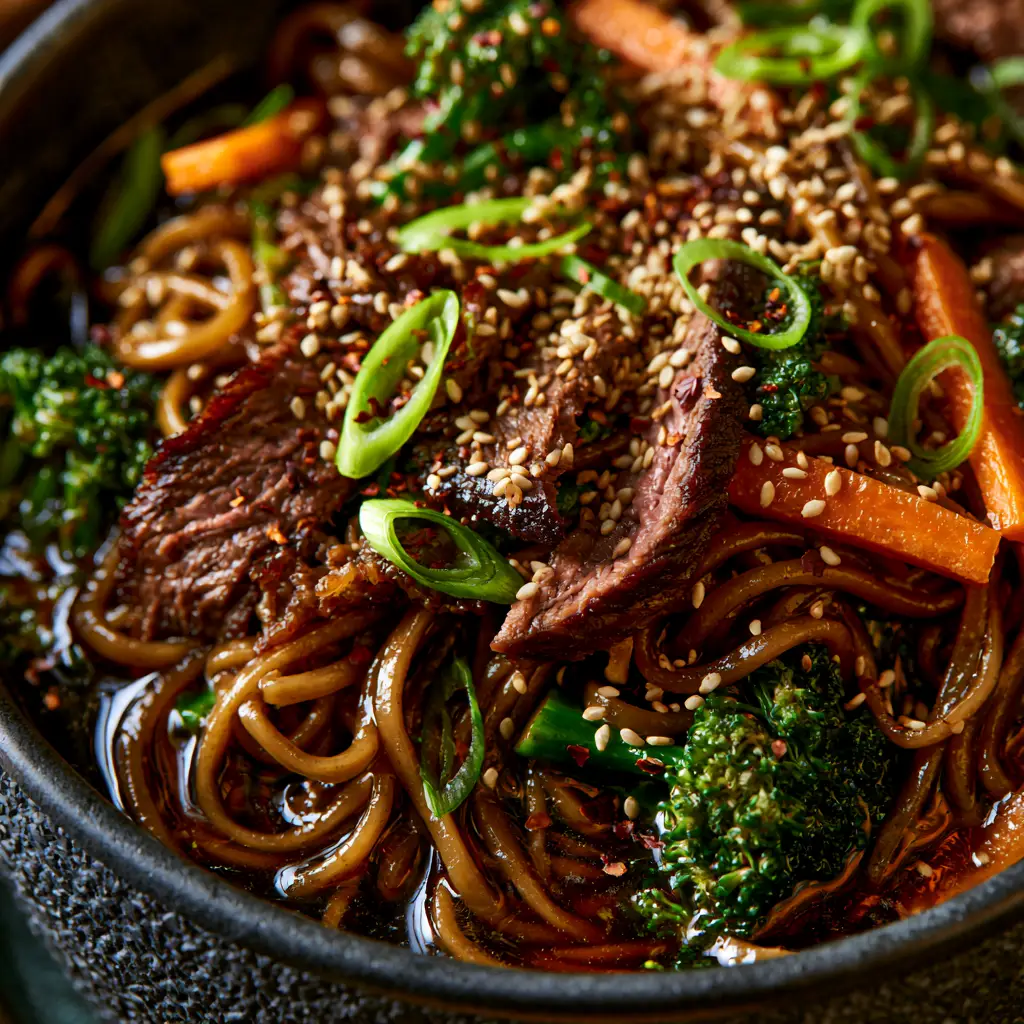
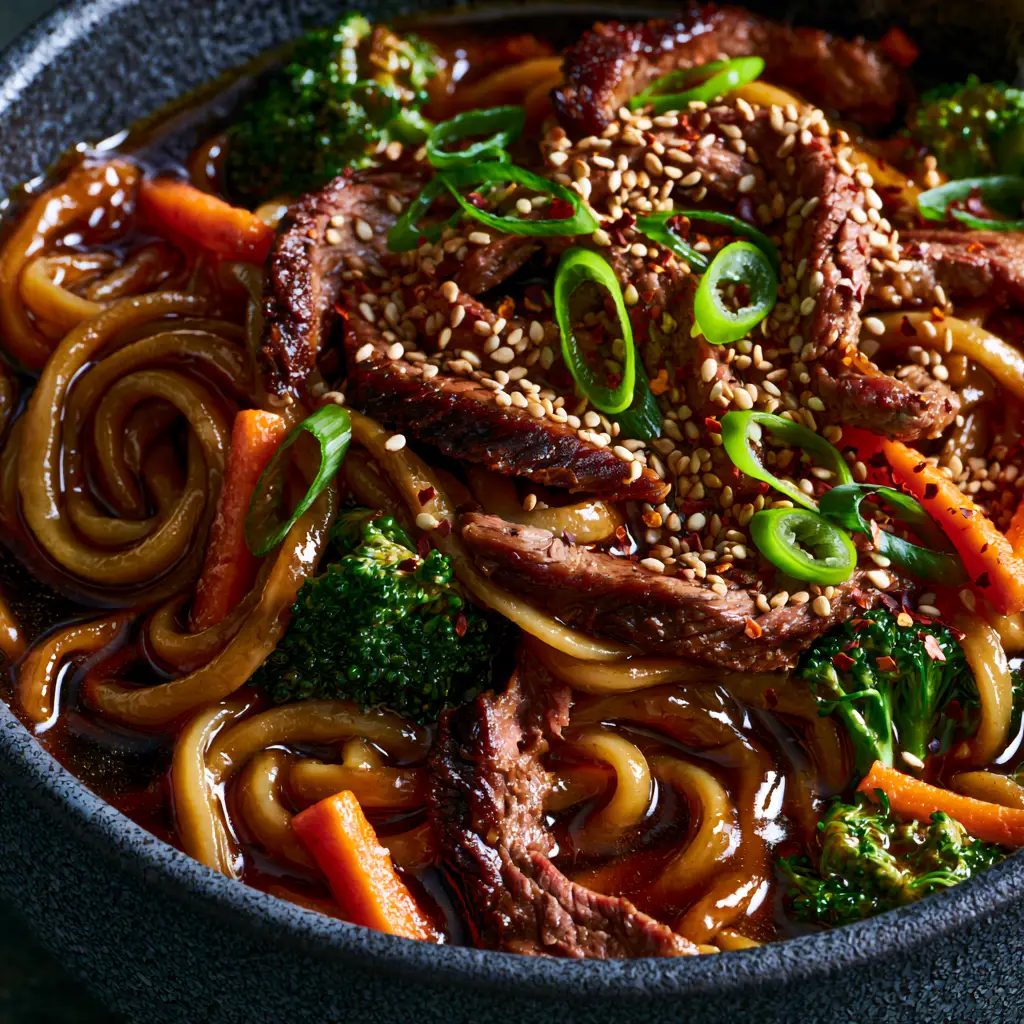
When it comes to mastering Asian dinner recipes, nothing compares to the sensory explosion of a perfectly executed beef lo mein. Imagine thick, glossy noodles swirling in a dark amber soy-ginger reduction, punctuated by the intense savory aroma of flash-seared beef. This dish isn’t just a meal; it’s a study in texture, from the crisp-tender snap of julienned carrots to the microscopic crunch of toasted sesame seeds.
To achieve the high-end food photography look described in our visual blueprint, we focus on the “Maillard reaction” for the steak and a precise emulsification for the sauce. This ensures every strand of noodle reflects the light with a viscous shine. Whether you are looking for healthy dinner ideas or a decadent weekend feast, this recipe delivers restaurant-quality results in under 30 minutes.
Why This Stir-Fry Outshines Your Local Takeout
- Extreme Texture Contrast: Thinly sliced flank steak features deep brown seared edges and caramelized surfaces that melt in your mouth.
- Viscous Umami Glaze: A rich, dark amber soy-ginger sauce that clings to every noodle rather than pooling at the bottom of the bowl.
- Vibrant Visuals: The neon-green scallion rings and bright orange julienned carrots provide a stunning color palette against the dark charcoal ceramic.
- Balanced Heat: Controlled spice levels from dried red chili flakes that enhance rather than overpower the ginger notes.
Essential Components for the Perfect Umami Reduction
Flank Steak: 1 lb (450g) of flank steak, sliced thin against the grain. This cut is prized in Asian dinner recipes for its ability to take on a hard sear while remaining tender.
Lo Mein Noodles: 12 oz (340g) of fresh or dried thick wheat noodles. These provide the structural base needed to carry the heavy, glossy sauce without becoming mushy.
Soy-Ginger Glaze: A blend of 1/2 cup (120ml) dark soy sauce, 1 tbsp (15g) grated fresh ginger, and 2 tbsp (30ml) honey. The sugars in the honey are vital for achieving those caramelized edges on the beef.
Fresh Aromatics: 3 cloves of minced garlic and 4 large scallions. The white parts go into the heat, while the green tops provide that “neon-green” finish.
Vegetable Medley: 2 cups (150g) of broccoli florets and 1 cup (100g) of julienned orange carrots. These add the essential “crisp-tender” element required for visual and textural balance.
Foundational Fats: 2 tbsp (30ml) of high-smoke point oil (like peanut or grapeseed) and 1 tsp (5ml) of toasted sesame oil. The high-smoke point oil allows for the steak’s deep brown crust without burning.
The Garnish Rain: 1 tbsp (9g) toasted white sesame seeds and 1/2 tsp dried red chili flakes. These microscopic elements add the final “handheld smartphone photo” detail that makes the dish pop.
The Culinary Toolkit for High-Heat Cooking
To recreate the steaming, macro-focused result of our blueprint, a heavy-bottomed carbon steel wok or a large cast-iron skillet is non-negotiable. These tools retain the intense heat necessary to sear the flank steak strips instantly, locking in juices while creating caramelized surfaces. You will also need a sharp chef’s knife for the precise julienning of carrots and a pair of long kitchen tongs to swirl the noodles into the dark amber reduction.
The Art of the Sear: Perfecting Flank Steak Textures
Preparing the Protein and Vegetables
Start by slicing your flank steak into 1/8-inch (3mm) strips across the grain. This shortens the muscle fibers, ensuring the meat is tender enough for a high-end noodle dish.
Julienne your orange carrots into matchsticks and break the broccoli into bite-sized florets. Consistency in size is the secret to ensuring both vegetables reach the “crisp-tender” stage at the exact same moment.
Mastering the High-Heat Sear
Heat your oil until a light wisp of smoke appears. Add the steak in a single layer, resisting the urge to stir for at least 60 seconds.
Look for the visual cue of deep brown, charred edges forming on the underside. Once caramelized, toss the beef quickly and remove it from the pan to prevent overcooking; it should remain pink in the center.
Building the Glossy Soy-Ginger Reduction
In the same pan, add your garlic and ginger, stirring for only 30 seconds until the aroma fills the kitchen. Pour in the soy sauce mixture and bring it to a vigorous simmer.
As the sauce bubbles, the water evaporates, leaving behind a viscous shine. This is the “dark amber” reduction that will coat your noodles like a second skin.
The Final Toss and Garnish Layering
Add the cooked lo mein noodles and vegetables to the sauce. Use your tongs to swirl the noodles, ensuring every inch is glossy and dark.
Add the seared beef back in for a final 30-second toss. Serve immediately in a dark charcoal bowl, finishing with a “rain” of toasted sesame seeds, neon-green scallion rings, and red chili flakes.
Pro Tips for Restaurant-Quality Noodle Texture
- The Noodle Rinse: If using dried noodles, rinse them in cold water immediately after boiling to stop the cooking process and remove excess starch for a cleaner gloss.
- Dry the Beef: Pat the flank steak dry with paper towels before searing. Excess moisture creates steam, which prevents the formation of caramelized edges.
- The “Gloss” Secret: If your sauce isn’t shiny enough, whisk in a small cornstarch slurry (1 tsp cornstarch to 1 tbsp water) during the final simmer.
- Vertical Garnishing: Apply the scallions and sesame seeds from a height of 10 inches to ensure an even, professional distribution across the dish.
Managing Your Leftovers: Storage and Reheating
This lo mein stays delicious for up to 3 days when stored in an airtight container in the refrigerator. To maintain the “viscous shine” when reheating, add a splash of water or beef broth before microwaving to loosen the sauce. For a different protein experience later in the week, check out our steak kabobs or try a side of Japanese BBQ chicken fried rice.
Perfect Pairings to Complete Your Menu
While this beef lo mein is a complete meal, it pairs beautifully with light, acidic starters. Consider serving it alongside a crisp cucumber salad or even some tanghulu for a sweet, crunchy dessert contrast. If you’re looking for more inspiration for your weekly rotation, explore our latest Thai fried pork or other Asian dinner recipes.
Your Stir-Fry Troubleshooting Guide
Yes, in a pinch, thick spaghetti works. However, lo mein noodles have a higher egg content and specific wheat texture that holds the viscous sauce better.
The ‘gloss’ comes from a combination of sugar (honey or brown sugar) and a controlled reduction. For extra shine, a small amount of cornstarch slurry acts as an emulsifier.
Add your vegetables to the hot wok after the meat and cook for only 2-3 minutes. This preserves the ‘crisp-tender’ texture and vibrant color.
It has a mild warmth from the dried red chili flakes. You can omit them for a completely mild dish or double them if you prefer significant heat.
Flank steak or skirt steak are ideal because they are lean, flavorful, and slice easily into thin strips that sear quickly without becoming tough.
Bring the Heat to Your Kitchen Tonight
This glossy beef lo mein proves that Asian dinner recipes can be both visually stunning and incredibly simple to execute. By focusing on the high-heat sear of the flank steak and the dark amber reduction of the sauce, you create a dish that rivals high-end food photography. Don’t forget to take a photo of your creation and tag us!
If you loved this recipe, please leave a comment below and share it with your friends. For more daily inspiration, follow us on Pinterest and save this pin to your favorite boards.
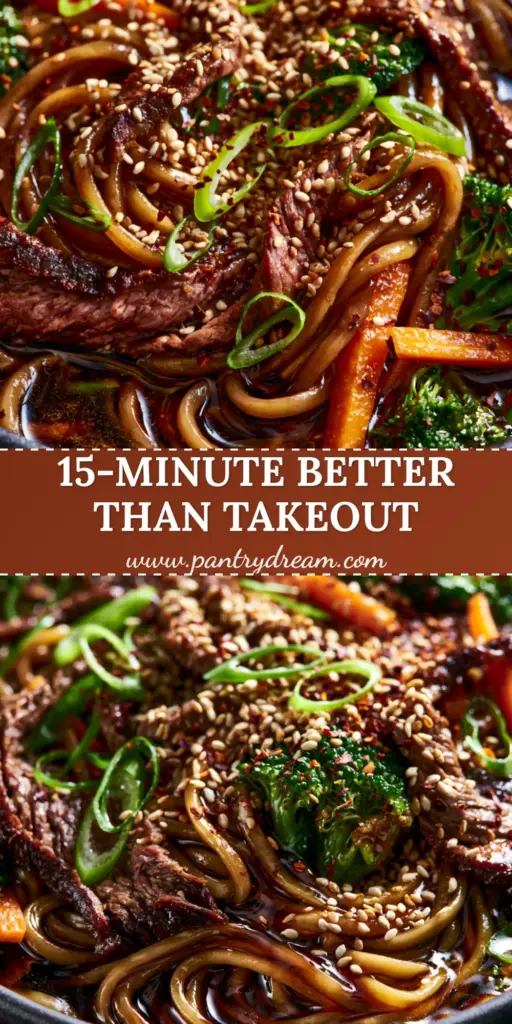
Asian Dinner Recipes: The Ultimate Glossy Beef Lo Mein with Seared Flank Steak
Ingredients
Equipment
Method
- Slice the flank steak against the grain into thin strips and pat dry with paper towels.
- Heat oil in a wok over high heat. Add steak in a single layer and sear for 1-2 minutes until deep brown caramelized edges appear.
- Remove beef. Add garlic, ginger, soy sauce, and honey. Simmer until the sauce becomes a dark amber, viscous glaze.
- Toss in cooked noodles, broccoli, and carrots. Mix until glossy. Add beef back in for 30 seconds.
- Serve in a bowl and rain down sesame seeds, scallion rings, and chili flakes.
Notes
Always slice against the grain for the most tender beef results.