Tanghulu is the ultimate sensory experience, a traditional Northern Chinese street snack that has taken the digital world by storm. It features vibrant fruit encased in a meticulously thin, crystal-clear, glass-like sugar coating that shatters with a satisfying “crack” upon the first bite. If you have been searching for that viral social media aesthetic—complete with tiny, delicate sugar bubbles and a high-gloss finish—you are in the right place.
The beauty of a perfect Tanghulu skewer lies in the contrast between the cold, juicy fruit and the hot, hard-crack sugar glaze. Achieving that transparent, non-sticky shell requires a blend of culinary precision and patience. This guide will walk you through the science of sugar temperatures to ensure your strawberries and grapes look like high-end edible gems.
The Secret to That Signature Glass-Like Crunch
- Ultra-Thin Transparency: We focus on a high-temperature boil to ensure the sugar is thin enough to see through but strong enough to snap.
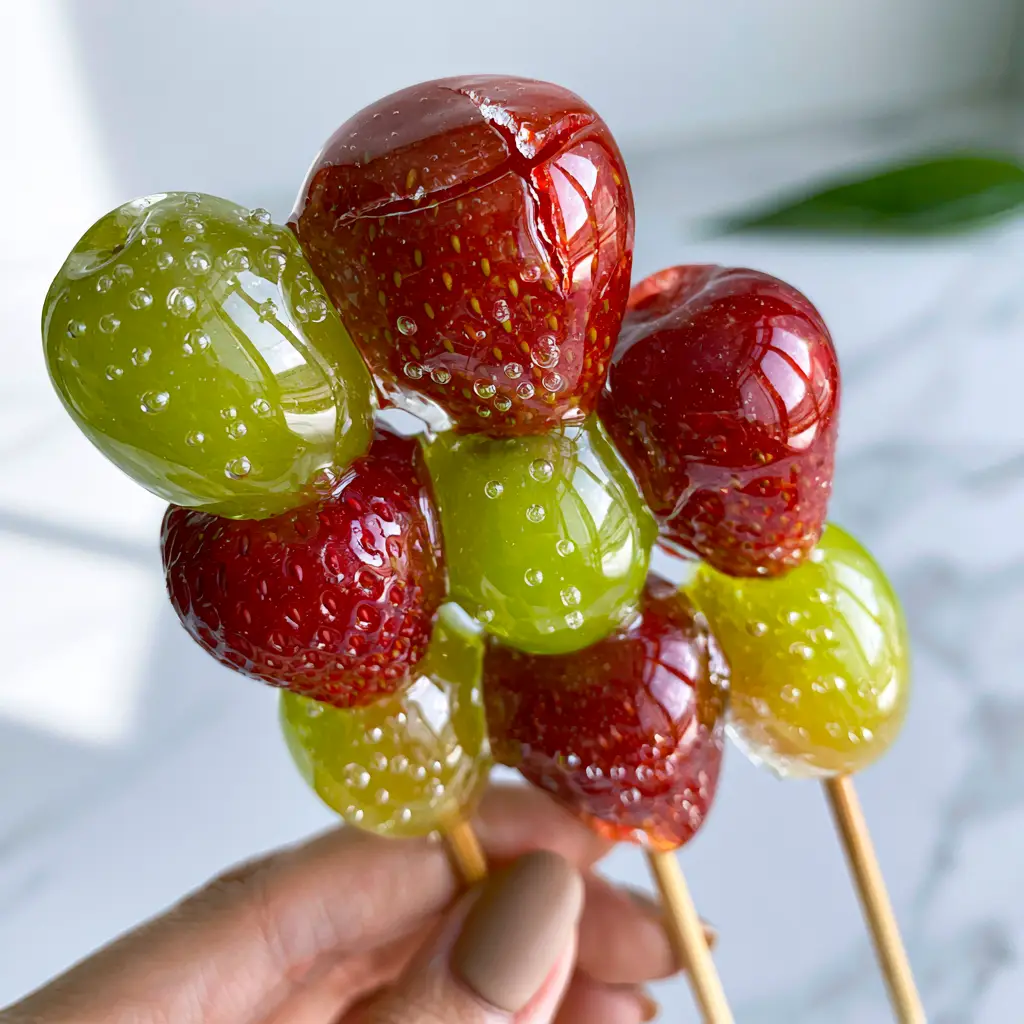
- Vibrant Color Contrast: By alternating deep red strawberries with neon-green seedless grapes, we create a visually stunning skewer that pops against any background.
- The Hard-Crack Texture: Learn the exact sensory cues to look for so your glaze is never tacky or stuck to your teeth.
- Professional Finish: We utilize natural light techniques and proper drying surfaces to keep your fruit reflective and glossy.
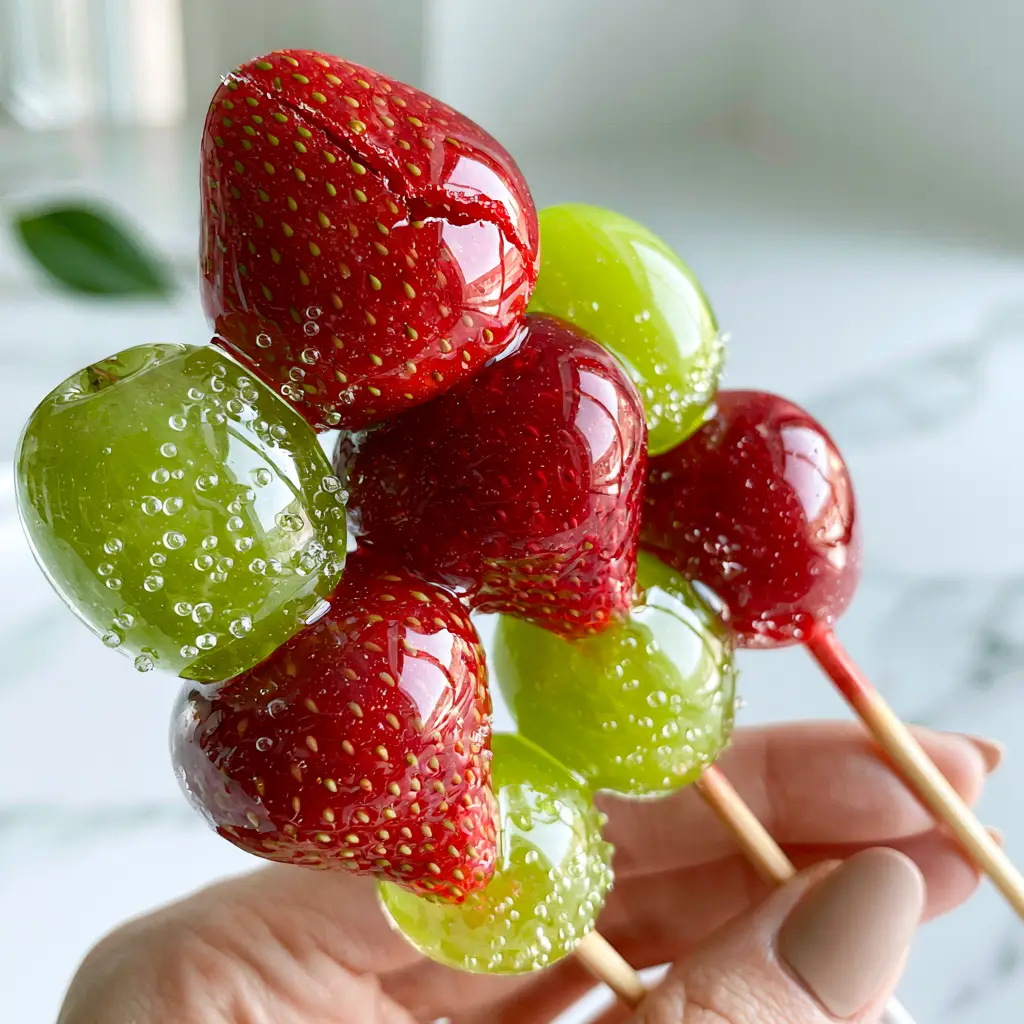
Premium Produce for Shimmering Fruit Skewers
Every ingredient in this recipe serves a structural and visual purpose. To achieve the high-end look of our visual blueprint, select the freshest produce available.
Whole Ripe Strawberries: Choose strawberries that are deep red and firm to the touch. Their natural acidity perfectly balances the sweetness of the ultra-thin transparent sugar glaze.
Green Seedless Grapes: Look for vibrant, neon-green grapes with a tight skin. The “snap” of the grape should mimic the “crack” of the sugar coating.
Granulated White Sugar: 2 cups (400g) of standard white sugar is the base for our syrup. This provides the neutral color needed for a crystal-clear finish.
Filtered Water: 1 cup (240ml) of water acts as the solvent for the sugar. Using filtered water prevents mineral impurities from clouding the transparent glaze.
Light Corn Syrup (Optional): 2 tbsp (30ml) of corn syrup is a professional “invisible” ingredient. It prevents the sugar from recrystallizing, ensuring your coating remains smooth and glass-like.
Essential Gear for Your Candy Kitchen
Achieving a professional-grade Tanghulu requires specific tools to manage high heat. You cannot achieve the “glass-like” effect without controlling the sugar’s transition states.
- Wooden Bamboo Skewers: These provide the classic handheld look and are sturdy enough to support the weight of the fruit.
- Heavy-Bottomed Saucepan: A thick base distributes heat evenly, preventing the sugar from scorching or turning amber too quickly.
- Candy Thermometer: This is vital for reaching the 300°F (150°C) hard-crack stage with scientific accuracy.
- Parchment Paper or Silicone Mat: A non-stick surface is required for resting the skewers so the glaze sets without sticking.
- Large Bowl of Ice Water: This “shocks” the sugar, causing it to harden instantly into a brittle shell.
The Foolproof Method for a Transparent Sugar Glaze
Prepping Your Fruit for Maximum Adhesion
Wash your strawberries and grapes thoroughly, but here is the critical rule: they must be 100% bone-dry. Any residual moisture will cause the sugar to slide off or become cloudy. Pat each piece of fruit with a paper towel and let them air dry for 15 minutes before threading onto your wooden bamboo skewers.
Threading the Perfect Skewer
Alternate one whole strawberry with one or two green grapes. For the most “viral” look, keep the fruit close together but not crushed. Ensure the tip of the skewer does not poke through the top strawberry to prevent juices from leaking into your syrup.
Mastering the Hard-Crack Syrup
Combine the 2 cups (400g) of sugar, 1 cup (240ml) of water, and 2 tbsp (30ml) of corn syrup in your saucepan. Stir once to combine, then place over medium-high heat. Once the mixture begins to boil, stop stirring. Stirring at this stage can cause the sugar to crystallize into a grainy mess.
Watch for the sensory cues: the syrup will transition from large, watery bubbles to tiny, delicate sugar bubbles that stack on top of each other. Once your thermometer hits 300°F (150°C), remove the pan from the heat immediately. The syrup should be perfectly clear and highly reflective.
The “Dip and Spin” Technique
Tilt your saucepan so the syrup pools on one side. Hold a skewer and quickly rotate it through the syrup. You want a single, ultra-thin layer. Immediately plunge the glazed skewer into the ice water bath for 5 seconds. This creates that sharp crack texture we are aiming for.
Expert Troubleshooting for the Perfect Snap
- If the glaze is sticky: You likely didn’t reach the full 300°F (150°C). The sugar must reach the hard-crack stage to become brittle.
- If the sugar turns yellow: The heat was too high or it cooked too long. True Tanghulu should be transparent; amber color indicates caramelization.
- Preventing “Sugar Feet”: If you have a pool of sugar at the bottom of your fruit, you didn’t spin the skewer fast enough after dipping.
- Tiny Bubbles: Don’t panic if you see small bubbles trapped in the glaze; this is a natural result of the boiling process and adds to the authentic aesthetic.
Creative Pairings and Serving Suggestions
Tanghulu is best enjoyed immediately while the sugar is crisp and the fruit is cold. It makes a fantastic addition to a spread of gluten-free snack recipes at your next gathering.
If you are hosting a summer party, these skewers are a lighter, sweeter alternative to savory steak kabobs. To wash it all down, pair the crunchy fruit with a refreshing blackberry coconut pink drink for a beautiful color-coordinated dessert experience.
Storage and Shelf-Life Reality
Because fruit contains water, Tanghulu is a “live” dessert. Within a few hours, the moisture in the fruit will begin to dissolve the sugar from the inside out. For the best “snap,” consume within 1 to 2 hours of making. Do not refrigerate for long periods, as the humidity in the fridge will make the coating tacky.
Answering Your Most Pressing Tanghulu Questions
Yes, use the ‘cold water test.’ Drop a small amount of syrup into ice water; if it hardens instantly and snaps when bent, it is ready.
No, frozen fruit releases too much moisture as it thaws, which will cause the sugar coating to melt and slide off immediately.
Fill the pot with water and bring it to a boil. The boiling water will dissolve the hardened sugar, making cleanup effortless.
The sugar has begun to caramelize. This happens if the heat is too high or if it cooks past the hard-crack stage. Keep a close eye on the temperature.
Stickiness occurs if the sugar syrup does not reach the ‘hard-crack’ stage of 300°F (150°C). Use a candy thermometer to ensure accuracy.
The Ultimate Crystal-Clear Tanghulu Recipe
Tanghulu Recipe: How to Make Crystal Clear Candied Fruit Skewers
Ingredients
Equipment
Method
- Wash strawberries and grapes, then pat them completely dry with paper towels. Any moisture will prevent the sugar from sticking.
- Thread alternating strawberries and grapes onto wooden bamboo skewers, ensuring the fruit is secure but not crushed.
- Combine sugar, water, and corn syrup in a saucepan. Bring to a boil over medium-high heat without stirring until it reaches 300°F (150°C).
- Quickly dip and rotate each skewer in the hot syrup, then immediately dip into an ice water bath for 5 seconds to set the glaze.
Notes
Work quickly once the sugar reaches temperature as it will continue to darken.
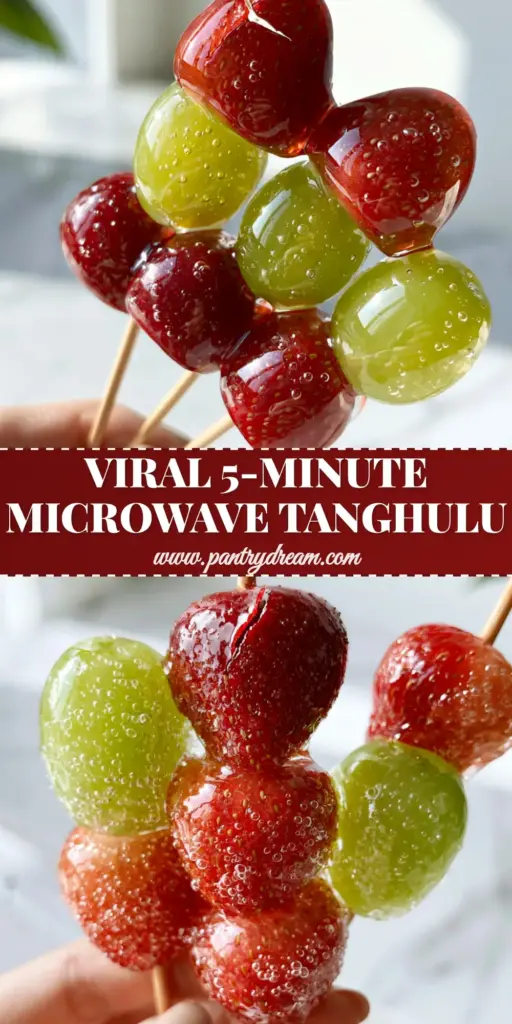
Conclusion: Share Your Glassy Creation
Making Tanghulu is as much about the process as it is about the result. The sound of that first sharp crack is incredibly rewarding. Once you master the temperature, you can experiment with other fruits like orange slices or kiwi. If you loved this recipe, please leave a comment below and share your photos with us on Pinterest!