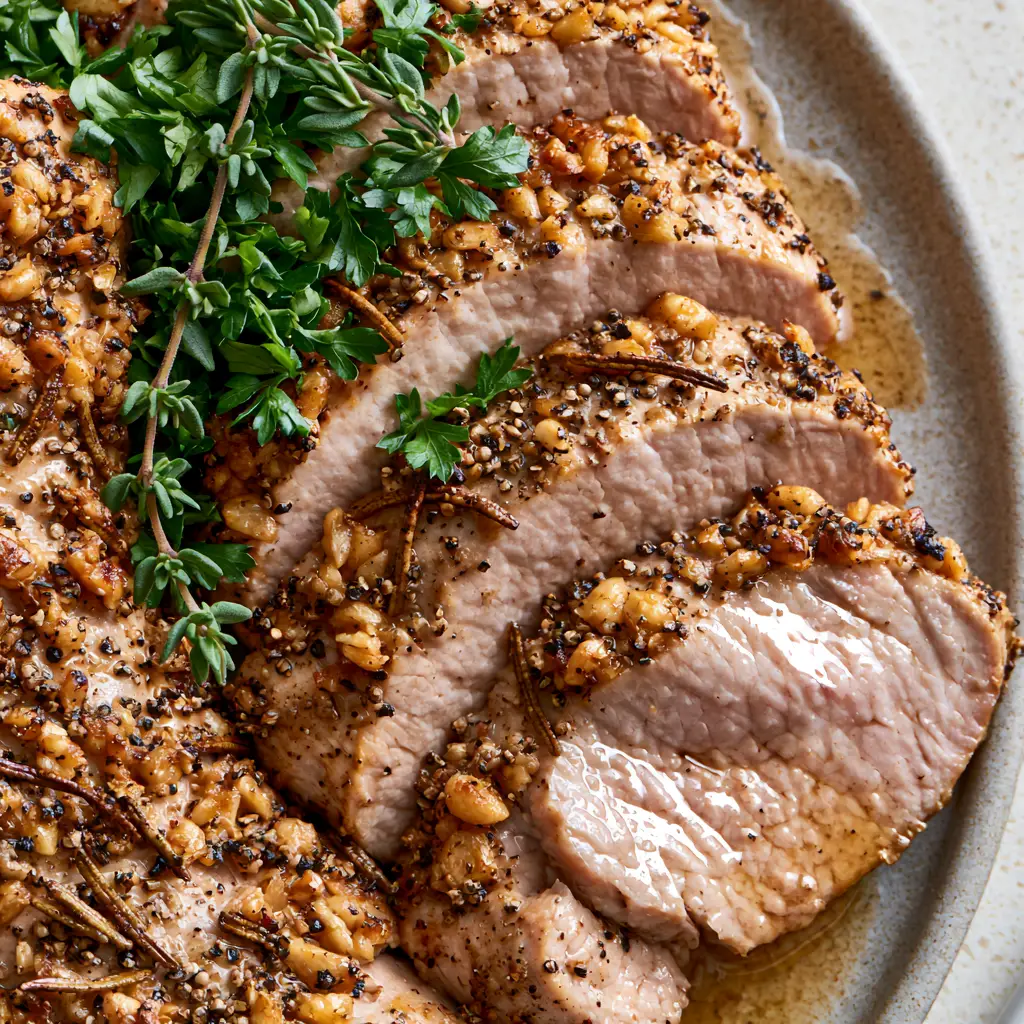
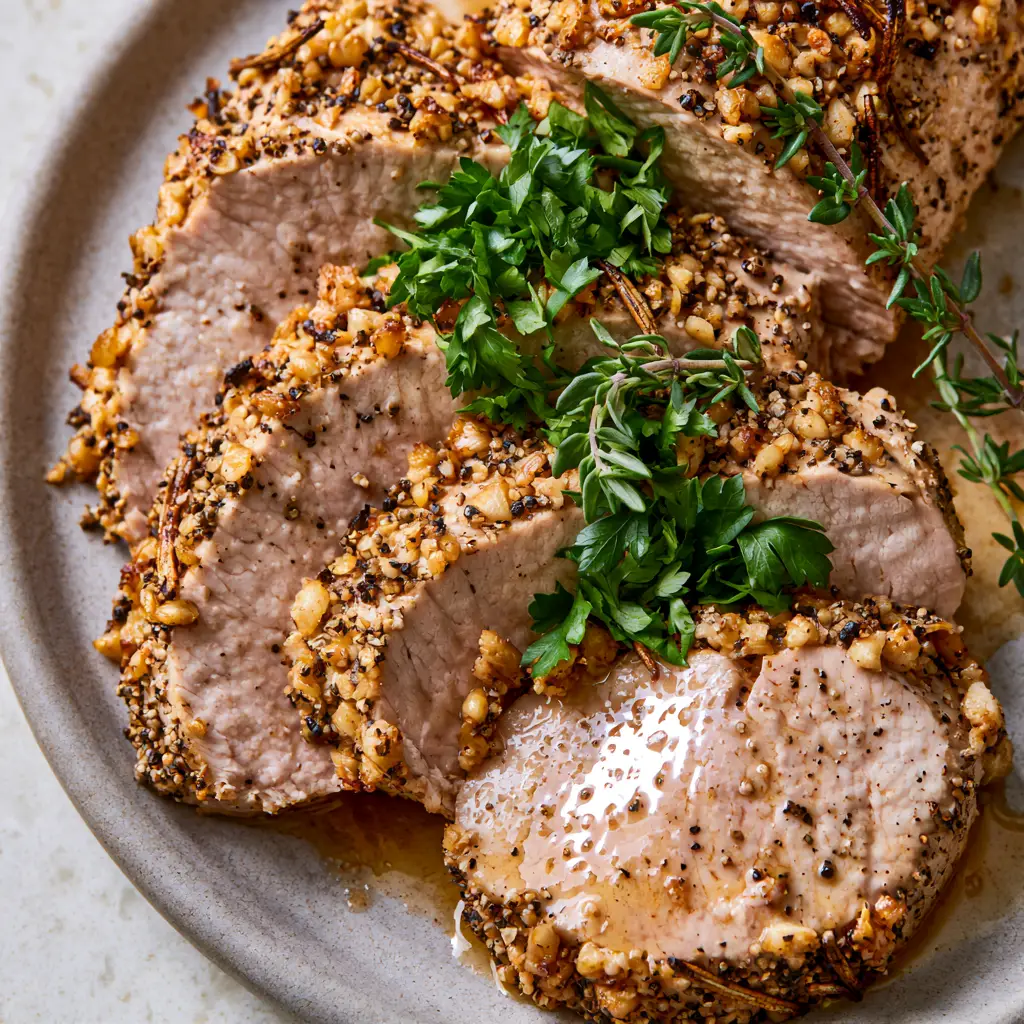
There is nothing quite like the sight of a perfectly roasted herb pork tenderloin fanned out on a matte stone plate. The exterior boasts a heavy, textured crust of golden-brown seared garlic bits and toasted rosemary needles, while the center remains a glistening, moist pale pink. When you slice into this succulent cut of meat, the visible juices pool slightly, promising a melt-in-your-mouth experience that is as visually stunning as it is delicious.
Achieving this level of culinary excellence requires more than just heat; it requires an understanding of the Maillard reaction and the delicate balance of fresh aromatics. This recipe focuses on creating a vibrant green garnish of freshly chopped parsley and whole thyme sprigs to contrast against the deeply seared meat. Whether you are hosting a formal dinner or a simple Sunday meal, this dish delivers high-quality, authentic results that look like they were captured by a professional food photographer.
By following our specific sensory cues—listening for the sizzle of the sear and watching for that perfect pale pink internal hue—you will master the art of the pork roast. This herb pork tenderloin isn’t just a meal; it’s a centerpiece that celebrates the textures of cracked black pepper and the crystalline crunch of sea salt flakes.
Why You Will Love This Succulent Roasted Pork
- The Ultimate Crust: A combination of minced garlic and cracked black pepper creates a heavy, textured exterior that provides a satisfying crunch in every bite.
- Perfectly Moist Texture: By targeting a precise internal temperature, we ensure the meat remains a glistening, moist pale pink rather than dry and white.
- Aromatic Depth: The trifecta of fresh rosemary, thyme, and parsley infuses the meat with an earthy, garden-fresh fragrance that fills your kitchen.
- Visual Elegance: With its golden-brown sear and vibrant green herb garnish, this dish is designed to be the star of your social media feed and your dinner table.
- Quick Gourmet: Despite its sophisticated appearance, this recipe comes together in under 45 minutes, making it a reliable option for busy weeknights.
The Anatomy of the Herb Pork Tenderloin Rub
To achieve the “heavy, textured crust” described in our visual blueprint, we cannot rely on powdered spices alone. We need the physical structure of fresh herbs and hand-minced aromatics. The moisture from the pork helps these ingredients adhere, while the high-heat sear toasts them into a savory “bark.”
Fresh Pork Tenderloin: Look for a 1.25 lb (565g) tenderloin that is uniform in thickness. This ensures even cooking so that every slice features that signature pale pink center without the tapered ends becoming overcooked.
Minced Garlic: You will need 4 large cloves (approx. 20g) of garlic. Instead of using a press, finely mince them by hand to create the “toasted garlic bits” that define the visual crust of our herb pork tenderloin.
Fresh Rosemary Needles: Use 1 tbsp (2g) of fresh rosemary, stripped from the woody stem. These needles toast beautifully in the oven, providing a piney aroma and a distinct, crunchy texture.
Cracked Black Pepper: Avoid pre-ground pepper. Coarsely crack whole peppercorns to provide a bold, spicy bite and a visible “cracked” aesthetic that contrasts with the golden meat.
Sea Salt Flakes: Finishing with sea salt flakes adds a final hit of salinity and a glistening crystalline look. The flakes don’t just season; they provide a delicate crunch that complements the tender meat.
Fresh Thyme and Parsley: These are our “vibrant green” elements. The parsley is chopped fine for the rub, while whole thyme sprigs are scattered over the top for an authentic, rustic presentation.
Foundational Fat: You will need 2 tbsp (30ml) of high-smoke point oil, such as avocado oil or light olive oil. This is the “invisible” ingredient that facilitates the golden-brown sear without burning the delicate herbs.
Essential Tools for a Professional Roast
To replicate the high-quality food photography results, you need the right gear. A heavy-bottomed oven-safe skillet, preferably cast iron, is non-negotiable for achieving that deep sear. The cast iron retains heat exceptionally well, ensuring the garlic bits toast evenly rather than steaming.
You will also need a reliable digital meat thermometer. Because we are aiming for a moist, pale pink center (exactly 145°F or 63°C), guessing is not an option. A sharp carving knife is the final essential tool, allowing you to create those thick, succulent slices that fan out beautifully on your matte neutral stone plate.
Step-By-Step: Mastering the Herb Pork Tenderloin
1. Preparing the Aromatic Herb Paste
In a small bowl, combine your hand-minced garlic, chopped parsley, rosemary needles, and cracked black pepper. Add 1 tbsp (15ml) of oil to create a thick, paste-like consistency. This paste is the secret to the heavy, textured crust that stays attached to the meat during the roasting process.
Pat the pork tenderloin completely dry with paper towels. This is a critical step; any surface moisture will create steam, preventing the golden-brown sear we are looking for. Once dry, rub the herb paste over the entire surface of the meat, pressing firmly so the garlic and herbs adhere to the muscle fibers.
2. The High-Heat Sear
Place your skillet over medium-high heat and add the remaining 1 tbsp (15ml) of oil. Wait until the oil is shimmering and just beginning to wisps of smoke. Carefully place the pork in the pan. You should hear a loud, aggressive sizzle immediately.
Sear the pork for 2-3 minutes per side. Your goal here is not to cook the meat through, but to develop the Maillard reaction. Look for the garlic bits to turn a deep golden-brown. Be careful not to let them turn black, as burnt garlic becomes bitter. This sear locks in the “glistening juices” that will eventually pool on your plate.
3. Roasting to Pale Pink Perfection
Transfer the skillet directly into a preheated 400°F (205°C) oven. Roast for 12-15 minutes. Start checking the internal temperature at the 10-minute mark. You are looking for a sensory cue of firm but yielding meat when pressed.
Pull the herb pork tenderloin from the oven when it hits 140°F (60°C). The temperature will rise to the food-safe 145°F (63°C) during the resting phase. This “carryover cooking” is the difference between a moist center and a dry, tough roast. If you enjoy this technique, you might also like our guide to ultra-tender pork preparations.
4. The Critical Resting Phase
Transfer the pork to a cutting board or your matte stone plate. Do not tent it tightly with foil, as this can soften the crispy herb crust you worked so hard to create. Let it rest for a full 10 minutes. During this time, the muscle fibers relax and reabsorb the juices. If you cut too soon, those glistening meat juices will run off the board instead of staying in the meat.
5. Plating and Finishing Touches
Slice the pork into thick, succulent rounds about 3/4 inch (2cm) thick. Fan them out across the plate to showcase the moist, pale pink center. Scatter your fresh thyme sprigs and extra chopped parsley across the top. Sprinkle a generous pinch of sea salt flakes over the glistening meat to catch the light, just like in the handheld smartphone photo style we are emulating.
Expert Tips for a Texture-Rich Crust
- Don’t Over-Crowd: If you are doubling the recipe, use two pans or roast in batches. Over-crowding drops the pan temperature and leads to gray, boiled-looking meat.
- The Garlic Secret: If your garlic is browning too quickly during the sear, turn the heat down slightly. The “toasted” look should be golden, not charred.
- Room Temperature: Take the pork out of the fridge 20 minutes before cooking. A cold tenderloin will cook unevenly, leaving the outside overdone before the center reaches the pale pink stage.
- Salt Timing: Only salt the meat immediately before it hits the pan. Salting too early draws out moisture, which interferes with the crust formation.
Storage, Reheating, and Freezing
Leftover herb pork tenderloin can be stored in an airtight container in the refrigerator for up to 3 days. To maintain the “moist” quality, reheat slices gently in a skillet over low heat with a splash of water or chicken broth covered with a lid. This creates a gentle steam that warms the meat without drying out the center.
We do not recommend freezing the cooked tenderloin if you want to maintain the specific “heavy, textured crust” and “pale pink” texture. Freezing can break down the cell structure, leading to a mushier result upon thawing. However, you can freeze the raw pork in the herb rub for up to 2 months for an easy “dump and roast” meal later.
What to Serve With Herb Pork Tenderloin
This dish pairs beautifully with sides that can soak up the pooling meat juices. A side of savory hoecakes provides a wonderful cornmeal crunch that complements the herb crust. Alternatively, for a lighter meal, consider serving it alongside baked feta and greens for a Mediterranean flair.
If you prefer a sweeter contrast to the savory garlic and rosemary, a small dollop of the glaze from our apple butter pork works surprisingly well. For those who love bold textures, try pairing this with savory Greek yogurt waffles for a unique brunch-style presentation.
Frequently Asked Questions
While possible, dried herbs won’t provide the same ‘heavy, textured crust’ or vibrant green color. If you must use dried, reduce the quantity by two-thirds, as dried herbs are more concentrated.
The key is to pat the meat completely dry with paper towels before applying the herb paste. Using a small amount of oil in the rub helps the minced garlic and herbs adhere during the high-heat sear.
Yes. According to the USDA, pork is safe to eat when it reaches an internal temperature of 145°F (63°C) followed by a three-minute rest. At this temperature, the meat will be a moist, pale pink.
Use a meat thermometer and pull the pork at 140°F (60°C). The temperature will rise to 145°F while resting. Overcooking even by 5 degrees can turn succulent pork into dry meat.
This usually happens if the heat is too high or the garlic is minced too finely (like a paste). Aim for small, hand-minced bits and a medium-high heat that sizzles without smoking aggressively.
The Ultimate Herb Pork Tenderloin Recipe
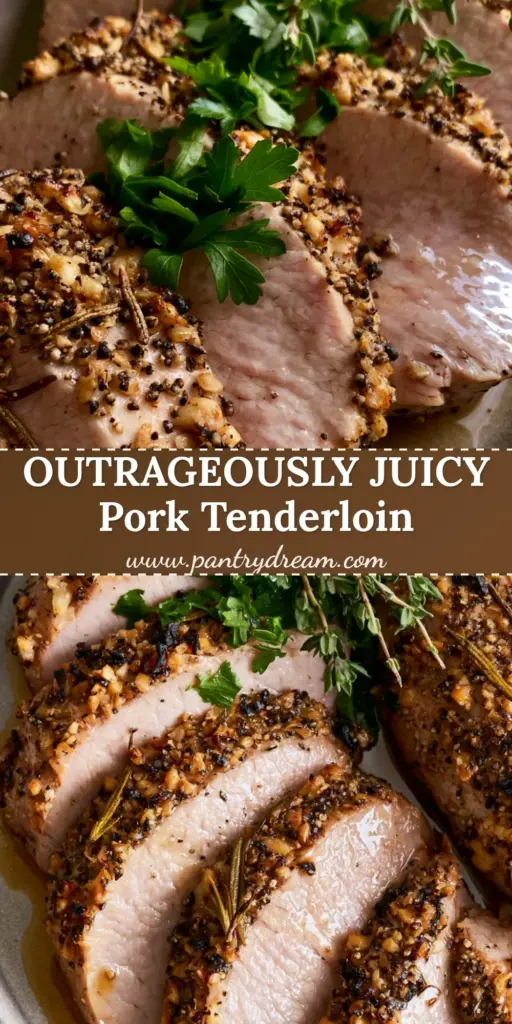
This recipe is designed to bring a touch of professional culinary forensic accuracy to your home kitchen. By focusing on the visual cues of the golden-brown crust and the succulent, glistening center, you are guaranteed a result that tastes as good as it looks. The combination of fresh rosemary, thyme, and toasted garlic makes this herb pork tenderloin a repeating favorite in any household.
Herb Pork Tenderloin with a Golden Toasted Garlic Crust
Ingredients
Equipment
Method
- Preheat your oven to 400°F (205°C). In a small bowl, mix minced garlic, rosemary, parsley, pepper, salt, and 1 tbsp (15ml) oil. Pat the pork dry and coat thoroughly with the paste.
- Heat 1 tbsp (15ml) oil in a cast iron skillet over medium-high. Sear the pork for 2-3 minutes per side until a golden-brown herb crust forms.
- Move the skillet to the oven. Roast for 12-15 minutes until the internal temperature reaches 140°F (60°C).
- Let the meat rest for 10 minutes. Slice into thick rounds, garnish with thyme sprigs, and serve on a stone plate.
Notes
Target 145°F (63°C) final temp for a safe, pale pink center.
Join Our Culinary Community
We hope this herb pork tenderloin becomes a staple in your recipe rotation. The balance of aromatic herbs and perfectly timed roasting creates a meal that is truly world-class. If you enjoyed this recipe, please leave a comment below and let us know how your crust turned out! Don’t forget to sign up for our newsletter for more elite culinary blueprints and share your creations with us on Pinterest.