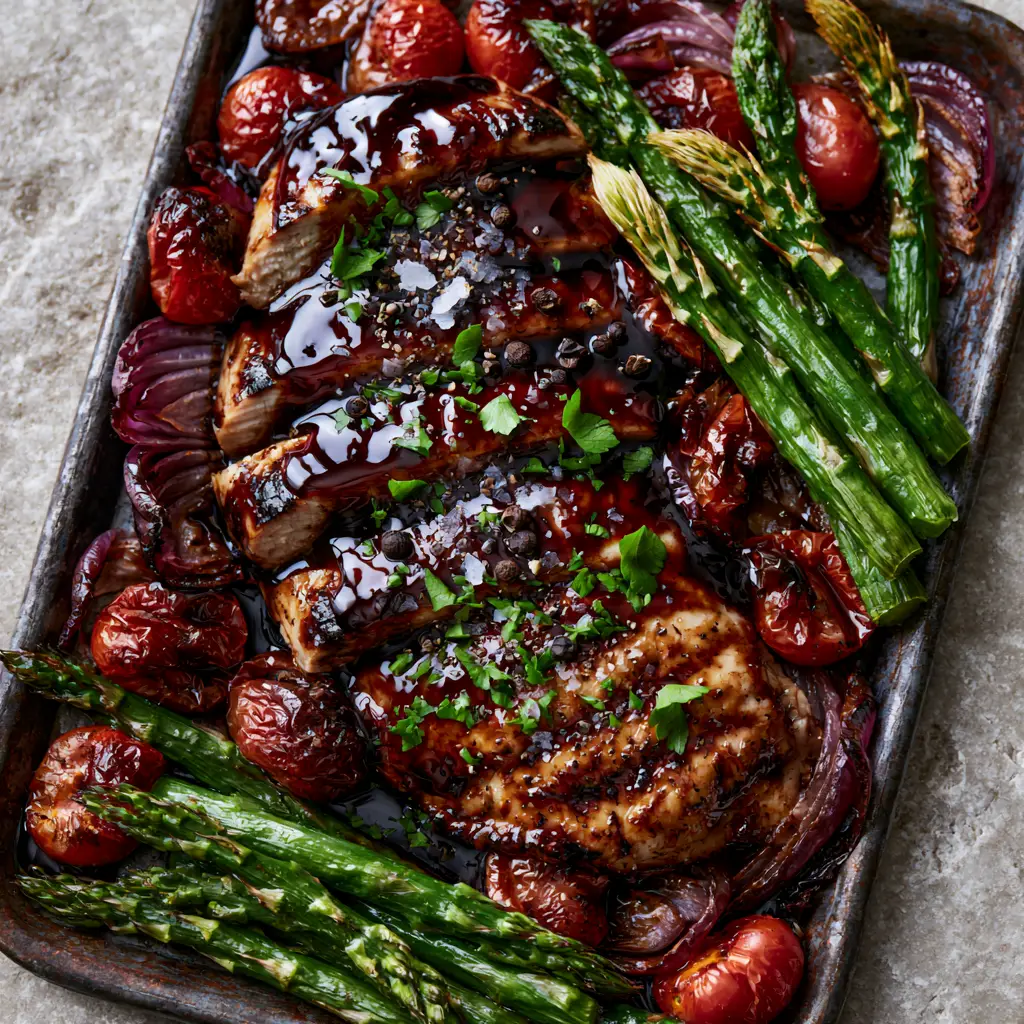
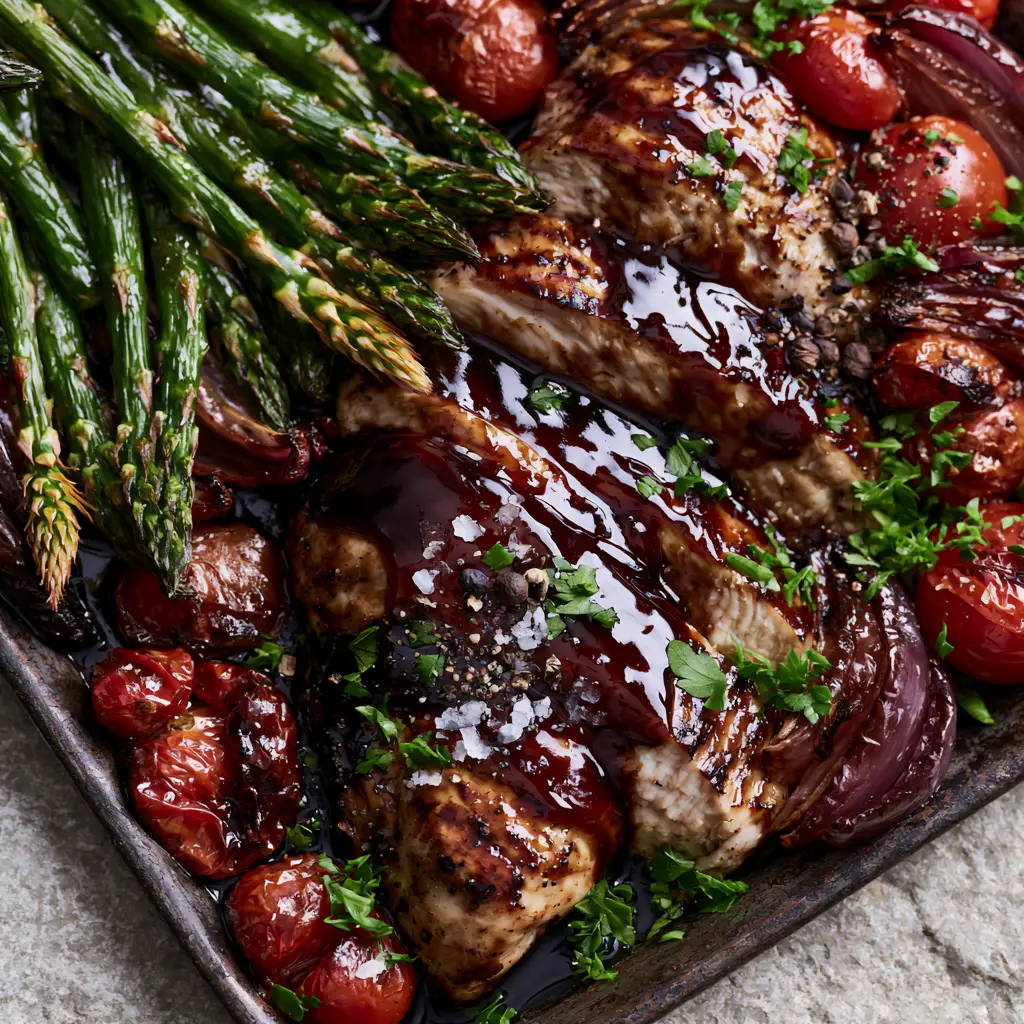
There is a specific culinary magic that happens when a sharp, acidic balsamic vinegar meets the high heat of a rustic sheet pan. This one pan balsamic chicken isn’t just a dinner solution; it is a visual and sensory masterpiece that brings restaurant-quality glazing techniques into your home kitchen. The chicken emerges from the oven with a thick, mahogany-colored coating that shines like a mirror, surrounded by vegetables that have been transformed by the roasting process.
Imagine the contrast of succulent, moist chicken breast against the pop of blistered cherry tomatoes and the crunch of vibrant emerald asparagus. Every element of this dish is designed to maximize flavor while minimizing cleanup. By utilizing a single dark metal sheet pan, we harness the power of even heat distribution to create caramelized red onion petals and charred vegetable tips that taste as good as they look.
Whether you are preparing a quick weeknight meal or hosting a casual dinner party, this recipe delivers on the promise of high-impact flavor with effortless execution. The glossy finish of the balsamic reduction provides a syrupy, reflective quality that makes the dish look like it jumped straight out of a professional food photography session. It is a testament to the fact that healthy eating can be incredibly indulgent and visually stunning.
The Unforgettable Textures of This One Pan Balsamic Chicken
- Glossy Mahogany Glaze: A thick, syrupy reduction that clings to the chicken, offering a perfect balance of sweet and tangy notes.
- Blistered & Charred Aromatics: Cherry tomatoes that burst with sweetness and red onions that have been softened into caramelized petals.
- Emerald Crispness: Fresh asparagus spears roasted until the tips are slightly crisp while the stalks remain tender and vibrant.
- Succulent Sear: Chicken breasts that feature visible golden-brown sear marks under a heavy, reflective glaze.
- The Finishing Touch: A delicate scatter of coarse flaky sea salt and cracked black peppercorns that provide a rhythmic crunch in every bite.
The Science Behind the Mahogany Glaze Ingredients
To achieve the visual depth described in our recipe blueprint, we must select ingredients that react specifically to heat. The foundation of this dish is the balsamic vinegar, which contains natural sugars that concentrate as the moisture evaporates in the oven.
Balsamic Vinegar of Modena: Look for a vinegar with a slightly syrupy consistency even before cooking; this ensures a deep mahogany color and a complex, oak-aged flavor profile. It provides the acidity needed to cut through the richness of the chicken.
Honey or Maple Syrup: We use 2 tbsp (30ml) of liquid sweetener to act as a catalyst for the Maillard reaction. This helps the glaze reach that “syrupy and reflective” state without burning too quickly.
Dijon Mustard: A single tablespoon (15g) acts as an emulsifier, binding the oil and vinegar together so the glaze stays on the chicken rather than sliding off onto the pan. It also adds a subtle background heat.
Fresh Garlic: Three cloves (15g) of minced garlic provide the aromatic backbone. As the garlic roasts in the balsamic mixture, it loses its sharp bite and becomes mellow and nutty.
Extra Virgin Olive Oil: We use 3 tbsp (45ml) of high-quality oil to ensure the chicken sears perfectly and the vegetables don’t stick to the dark metal pan. Oil is the conductor of heat that creates those golden-brown sear marks.
The Protein: 1.5 lbs (680g) of boneless, skinless chicken breasts. If you enjoy diverse textures, you might also find success using similar glazing techniques with crispy pork textures or even hearty seafood.
Essential Tools for Professional Sheet Pan Results
To achieve the macro-photography finish, you need a rustic dark metal sheet pan. Darker pans absorb more heat, which is the secret to getting those deeply charred “blistered” cherry tomatoes and caramelized onion petals.
A high-quality chef’s knife is also required for the precision slicing of the chicken. When you slice the chicken after roasting, you want clean, succulently moist edges that showcase the interior juiciness against the dark exterior glaze. Using a meat thermometer is non-negotiable for ensuring the chicken reaches an internal temperature of 165°F (74°C) without drying out.
Finally, a small whisk and mixing bowl are essential for creating the emulsion of the balsamic glaze. If you enjoy the process of building complex flavor profiles, you’ll see similar techniques used in our Japanese BBQ-inspired recipes.
The Master Strategy for Perfect One Pan Balsamic Chicken
Preparing the Balsamic Reduction Base
Begin by whisking together your balsamic vinegar, honey, Dijon mustard, minced garlic, and a portion of the olive oil. You are looking for a cohesive, dark liquid that coats the back of a spoon. This is the “liquid gold” that will transform your chicken into the mahogany masterpiece seen in the visual prompt.
Season your chicken breasts generously with salt and pepper before dredging them lightly in the glaze. Let them sit for at least 10 minutes; this allows the acidity to begin tenderizing the meat fibers, ensuring a “succulent and moist” final result.
Achieving the Golden-Brown Sear
Preheat your oven to 425°F (220°C). While the oven heats, place your dark metal sheet pan inside. Placing the chicken onto a preheated pan creates an immediate sear, locking in juices and creating those sought-after golden-brown marks under the glaze. You should hear a distinct “hiss” the moment the meat touches the metal.
Arrange the chicken in the center of the pan, leaving ample space between each breast. If the pan is crowded, the chicken will steam instead of sear, and you will lose that reflective, glossy texture.
Roasting the Emerald Vegetables and Aromatics
In a separate bowl, toss the cherry tomatoes, asparagus spears, and red onion petals with the remaining olive oil and a pinch of salt. The red onions should be separated into “petals” to ensure they caramelize evenly rather than clumping together.
Arrange the vegetables around the chicken. The cherry tomatoes will begin to “blister” as their skins tighten and eventually pop, releasing sweet juices that mingle with the balsamic glaze. The asparagus tips will catch the high heat of the oven, turning crisp and slightly charred while the stalks remain a vibrant emerald green.
The Final Glaze and Resting Period
Halfway through the cooking time (about 10-12 minutes), brush an additional layer of the balsamic mixture over the chicken. This layering technique is how we achieve that “heavy, glossy, dark mahogany” look. It builds a lacquer-like finish that is both visually striking and intensely flavorful.
Once the chicken reaches its target temperature, remove the pan from the oven. Let the meat rest for 5 minutes before slicing. This is the most critical step for “moist chicken”; resting allows the juices to redistribute so they don’t run out when you cut those thick slices.
Expert Tips for Sheet Pan Excellence
- The “Dry” Rule: Always pat your chicken and vegetables completely dry with paper towels before adding oil or glaze. Moisture is the enemy of a good sear; if the ingredients are wet, they will boil rather than roast.
- Onion Petal Precision: Cut your red onion into thick wedges, then separate the layers. These “petals” have more surface area to touch the hot pan, leading to better caramelization.
- Tomato Timing: If your cherry tomatoes are very small, add them to the pan 5 minutes after the chicken and asparagus to prevent them from completely disintegrating.
- The Gloss Factor: If your glaze isn’t looking reflective enough, a tiny drizzle of honey mixed with the pan juices at the very end will create that high-shine smartphone photo finish.
Storage and Reheating for Meal Prep Success
One pan balsamic chicken is an incredible option for meal prep. Store the sliced chicken and roasted vegetables in airtight containers for up to 4 days in the refrigerator. The glaze actually thickens further when chilled, making the leftovers incredibly flavorful.
To reheat, avoid the microwave if possible as it can make the asparagus mushy. Instead, place the chicken and vegetables back on a sheet pan in a 350°F (175°C) oven for 8-10 minutes. This helps maintain the integrity of the blistered tomatoes and the crispness of the asparagus tips.
What to Serve with Your Balsamic Masterpiece
This dish is a complete meal on its own, but it also pairs beautifully with other textures. Consider serving it over a bed of fluffy quinoa or alongside a fresh seasonal pasta primavera to soak up the extra mahogany glaze. The acidity of the balsamic also complements the richness of eggs; try serving leftover chicken with baked feta eggs for a high-protein brunch.
If you are looking for a lighter accompaniment, a simple green salad or even some healthy snacks can round out the meal without overshadowing the complex flavors of the roasted chicken.
Frequently Asked Questions
Yes! Chicken thighs work beautifully and are even more forgiving. Increase the roasting time by about 5-10 minutes to ensure they reach an internal temperature of 175°F (79°C) for the best texture.
The key is using a combination of balsamic vinegar and a sweetener like honey. As the chicken roasts, the sugars caramelize, creating that deep, reflective mahogany finish. Brushing an extra layer of glaze halfway through cooking is essential.
Absolutely. This dish stores well for up to 4 days. Reheat it in the oven or an air fryer to maintain the crispness of the asparagus tips and the integrity of the glaze.
Shallots are an excellent alternative. They offer a milder, sweeter flavor and caramelize beautifully in the balsamic reduction, much like the red onion petals.
Mushy vegetables are usually caused by overcrowding the pan or excess moisture. Ensure your vegetables are patted completely dry before oiling and use a large, dark metal sheet pan to allow for proper airflow and high-heat contact.
The Ultimate One Pan Balsamic Chicken Recipe
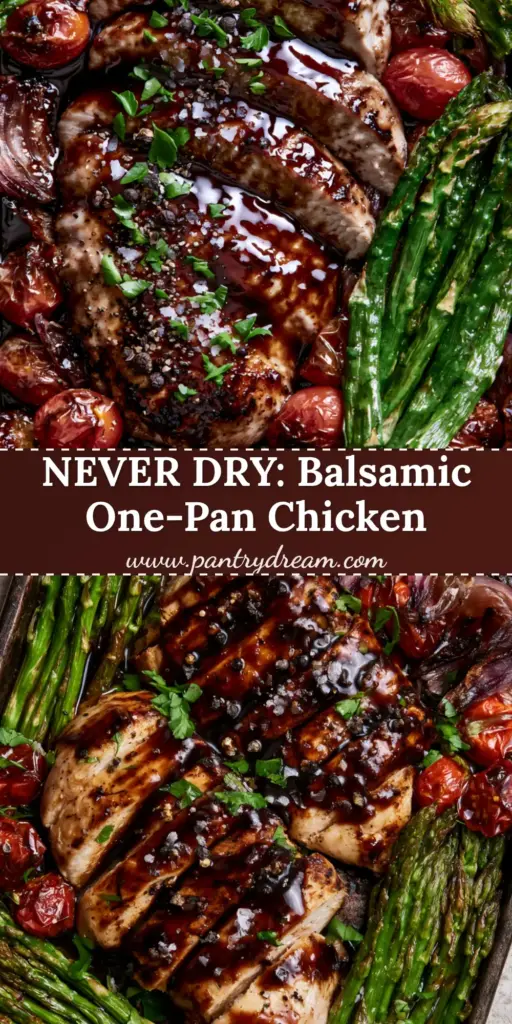
One Pan Balsamic Chicken with Blistered Tomatoes and Roasted Asparagus
Ingredients
Equipment
Method
- Preheat your oven to 425°F (220°C) and place a dark metal sheet pan inside to get hot.
- In a small bowl, whisk balsamic vinegar, honey, Dijon mustard, minced garlic, and 1 tbsp of olive oil until emulsified.
- Season chicken with salt and pepper, then coat with half of the balsamic glaze. Place onto the hot sheet pan to sear.
- Toss asparagus, tomatoes, and red onion petals with the remaining olive oil and arrange around the chicken.
- Roast for 20-25 minutes, brushing the chicken with remaining glaze halfway through until the chicken reaches 165°F (74°C) and tomatoes are blistered.
- Let chicken rest for 5 minutes, then slice into thick pieces. Arrange on the pan among the vegetables.
- Scatter flaky sea salt, cracked pepper, and fresh parsley over the entire pan before serving.
Notes
Don't skip the resting period to ensure the chicken remains succulent.
A New Weeknight Favorite
This one pan balsamic chicken proves that you don’t need a sink full of dishes to create a meal that looks and tastes like a work of art. The combination of the syrupy mahogany glaze and the perfectly roasted vegetables creates a harmony of flavors that will have your family asking for seconds. We hope this recipe brings a touch of gourmet flair to your busy evenings!
Did you try this recipe? We would love to see your glossy glaze results! Leave a comment below, sign up for our newsletter for more one-pan wonders, and be sure to share your creations and follow us on Pinterest.